
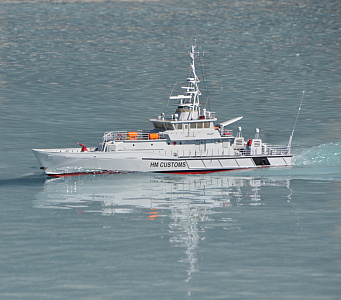
H.Sw.M.S. Visby
Reviewed the several attempts made to ensure a leak free jet installation. Decided waterjets have so many potential leak paths might be a good idea to fit a bilge pump.
Had a suitable pump salvaged from a scrap electric garden sprayer. Original idea was to activate the pump using the water alarm, but decided that was too complex at this stage. An automatic action might also obscure the leakage rate and negate desires to maintain system redundancy.
Have now installed an alarm as one feature and can activate the pump with a second RC switch. Once trials are complete, may revert to making this pump automatic. Hope by then to have gained enough confidence in the leak correction.
Another change was to replace the horizontal flat styrene panel, added earlier to accommodate the waterjets, with a perspex one. Can now observe the jet operation without dismantling. Once did this to another model, it does aid troubleshooting.
Spring is approaching and the ice has largely gone, so tried the first open water sail. Objectives are to check and see if the leak treatments worked dynamically and try all jet movements in actual operation. Will also give an insight into the ballast and waterline relationship.
The temperature was only + 3C, but thought a double layer of woad would provide enough thermal protection. The last visit to our site showed no ice, but we had forgotten the effect of wind!
A northerly wind had blown a thick layer of ice into the dock. Fortunately, there were several inches of open water alongside the dock edge. Enough to do many of the planned maneuvers.
Was able to establish:
1) Base ballast requirements and that the waterjets worked. They move a lot of water and suspect the model will be overpowered. Might be better with 2 not 3S power.
2) The reverse operation and linkage work.
3) The cooling system works, although the bilge pump requires priming first.
4) Leakage rate was lower than expected and the water alarm not activated. Seems the sealing efforts have achieved some success.
Waiting now for the ice to move out so can resume with the more ambitious tests.