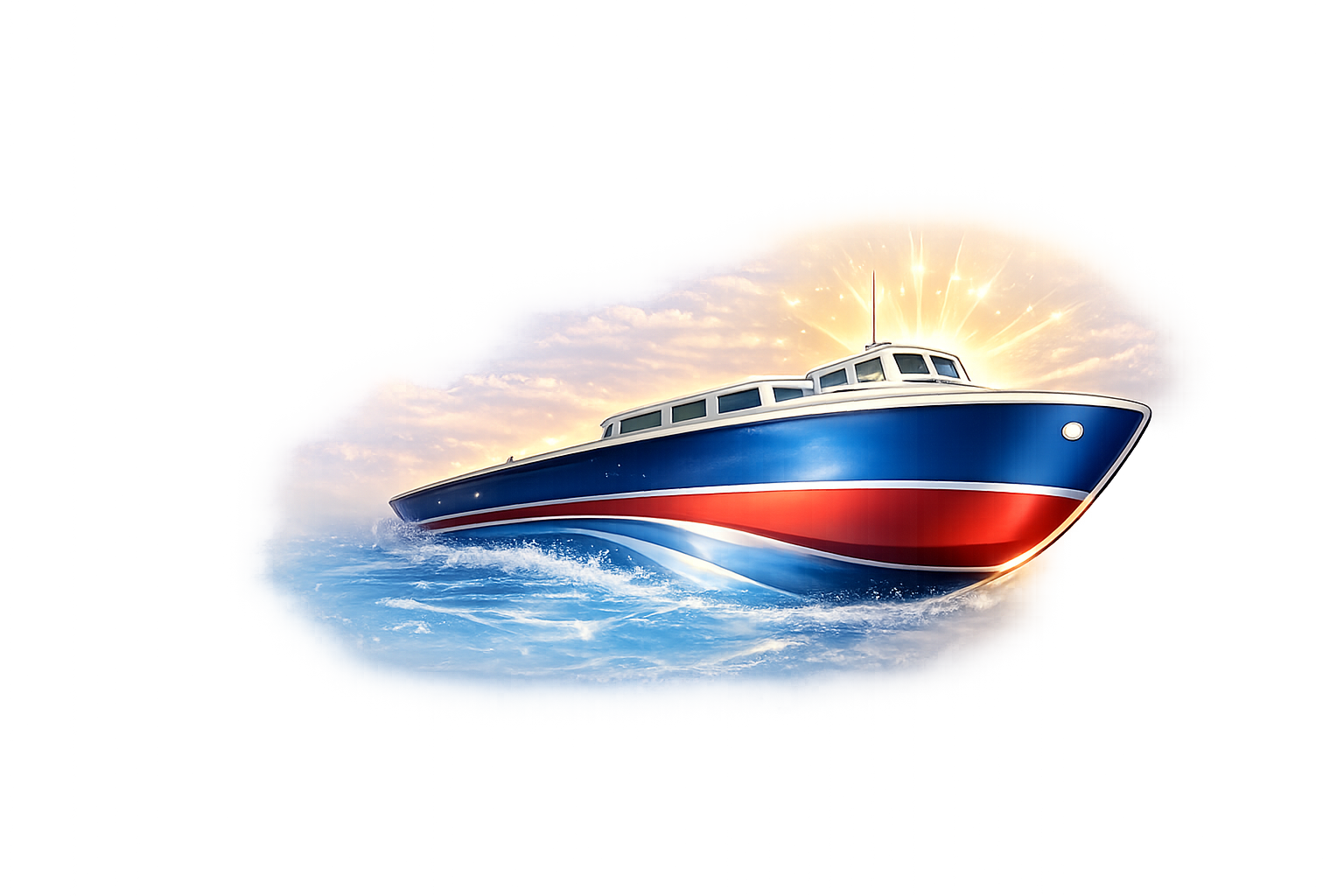
Admiralty Coaster C642 at SMBC Video 30 March 2025
Admiralty Coaster C642
Typical of many such craft built for servicing fleet vessels. One of a group built by Yarwoods of Northwich, C.642 was launched in 1946 and served until being placed for disposal in 1956. Purchased by F.T. Everard & Sons Ltd of Greenwich, Kent, C.642 was renamed the ‘Clanity’ and used for a short period as a dry cargo carrier before being lengthened and widened in a conversion to a tanker. Steam propulsion was retained until she ended her days in a scrap yard in Antwerp in 1969.
HMS Renown Picket Boat at Southport MBC Video 16 March 2025
Steam Pinnace
199 is a steam pinnace of the Royal Navy, built in 1909 by J. Reid of Portsmouth. She is now owned by the National Museum of the Royal Navy, and is based at Portsmouth Historic Dockyard.[1][2][3]
History
During its restoration, the ship was misidentified and it became known as Steam Pinnace 199.[1][3] However, it was later determined that the ship's machinery originated from pinnaces 208 and 224, and that its hull, stern cabin, and funnel also came from 224. Despite these findings, the name Steam Pinnace 199 was retained.[1][3][4][5] Steam Pinnace 224 was built in 1909, and was assigned to the battlecruiser HMS Inflexible in 1916.[1][3] It was sold out of the Royal Navy on 6 August 1948,[3] and in 1952 she was sold to a private owner, renamed Treleague, and was converted into a houseboat located on the Thames.[1] During this time its steam machinery was removed, and replaced by a petrol engine.[4] After serving as a houseboat for about 20 years, she was purchased by an antiques dealer who intended to restore her.[1][4] However, the project was deemed too expensive and its hull was sold to the National Museum of the Royal Navy in 1979.[1][4]
Restoration
She was restored by a group called the Steam Launch Restoration Group, based in Gosport.[2] In 1983, she was given a boiler and compound engine from a similar steam pinnace,[1][4] found at the Royal Navy shore establishment HMS Sultan.[1][4] Her original steam auxiliary engines were found at a yard in Belgium.[1] During her restoration, the ship was given a replacement Hotchkiss 3-pounder gun dating from 1887, and salvaged from the sea by a trawler in 1980.[1][5] The gun has been restored cosmetically; however, it is not functional and the inside of the barrel is corroded.[1][5] The ship was finally recommissioned in 1984, and was kept in the Mast Pond of Portsmouth Historic Dockyard until 1998,[2][4] when she was brought to Gosport for a refit.[2][4] From 1999 to 2001 her machinery was given a major refurbishment.[4] Since then, she has taken place in many events such as the International Festival of the Sea, the Yarmouth Old Gaffers Festival and the Southampton Boat Show.[1][4] In May 2011, she developed leaks in her boiler tubes and was transported to the Maritime Workshop in February 2012.[1] She was given a refit, and she was relaunched in 2015.[1] Steam Pinnace 199 is preserved afloat in Boathouse 4 at Portsmouth Historic Dockyard.[2][5]
Amaranth Fifie Fishing Boat Video VE Day Celebrations at Southport MBC 04 May 2025
TeThe Fifie is a design of sailing boat developed on the east coast of Scotland. It was a traditional fishing boat used by Scottish fishermen from the 1850s until well into the 20th century. These boats were mainly used to fish for herring using drift nets, and along with other designs of boat were known as herring drifters.
Design
While the boats varied in design, they can be categorised by their vertical stem and stern, their long straight keel and wide beam. These attributes made the Fifies very stable in the water and allowed them to carry a very large set of sails. The long keel, however, made them difficult to manoeuvre in small harbours.
Sailing Fifies had two masts with the standard rig consisting of a main dipping lug sail and a mizzen standing lug sail.[1] The masts were positioned far forward and aft on the boat to give the maximum clear working space amidships. A large fifie could reach just over 20 metres (66 ft) in length. Because of their large sail area they were very fast sailing boats.
Fifies built after 1860 were all decked and from the 1870s onwards the bigger boats were built with carvel planking, i.e. the planks were laid edge to edge instead of the overlapping clinker style of previous boats. The introduction of steam powered capstans in the 1890s, to help raising the lugs sails, allowed the size of these vessels to increase from 30 feet (9.14 m) to over 70 feet (21.34 m) in length. From about 1905 onwards sailing Fifies were gradually fitted with engines and converted to motorised vessels.
Isabella Fortuna 830820
There are few surviving examples of this type of fishing boat still in existence. The Scottish Fisheries Museum based in Anstruther, Fife has restored and still sails a classic example of this type of vessel named the Reaper. The Swan Trust in Lerwick, Shetland have restored and maintain another Fifie, The Swan, as a sail training vessel. She now takes over 1000 trainees each year, and has taken trainees to participate in the Cutty Sark Tall Ships Races to ports in France, Denmark, the Netherlands, Ireland as well as around the UK. The Isabella Fortuna is owned by the Wick Society.st
New Brighton Steam Lifeboat Video at Southport MBC 09 March 2025
The lifeboat’s hull was of best quality steel, the plates being triple rivetted together with 72,000 rivets – torpedo boats of the period were double rivetted – without a single continuous seam, in order to counter the stresses smashing into waves, whereas other steel hulls were single rivetted. It was not self-righting beyond 110°, the mast being 20° below the horizontal, but featured modified end boxes designed similarly to self-righting vessels, and contained fifteen water tight compartments, bilge pumps and steam ejectors. 15.24m long with overall beam of 4.36m and 1.07m deep, including a flush deck with inset accommodation for up to 40 persons, it was powered by twin horizontal direct acting compound steam engines complete with one boiler and at full speed, a 1,000-rpm fan created forced draught, and it had twin funnels. Recognition must be given to the fortitude of the engine room crew including stokers of these steam lifeboats when being tossed around in storms but the forced draught would have provided ample ventilation. A fuller account may be read here.
This lifeboat was transferred in 1892 to New Brighton temporarily then was based at Holyhead – there, in 1901, while on passage, a boiler room explosion killed two firemen. It was retired from service in 1928.
Just a few shots of May 31, 2025, boats in the park today. It felt like January weather.I forgot to add the balloon buster Media File run the club did 4 balloon busting.
The club I'm in will be running CMM Boats in the Park on May 31 /June 1st, weather permitting, at the Steam Museum in Hamilton. I ran the Zwart Zee last year.
Sat. Sept 7 Our club will have a fun run with Military ships Warships Merchant marine & support ships I looked up Clive Puffers & found out that Puffers where support ships during WW2 & the Admiralty placed a order in 1939 for steamships on that design Class VIC for Victualling Inshore Craft so my Clive Puffer will fit right in. Hope for no rain & I'll post a few war ship Photos.
Hello Garth, the puffers did most of their trade on the Forth and Clyde canal in Scotland, and were known as Clyde Puffers.
But they have been in existence since 1856 to 1939. There is loads of history on the Internet.
Here is another model that was unfinished the I picked up for $10.00 Canadian last year got the model from a member of Confederation Marine Modelers . The Zwarte Zee is 30 inch's in length & is R/C .I forgot to do a build log on the model. If the wind is low I'll be running the model at Boats in the park this weekend at Hamilton's Steam Museum I did do a build log on model
Aucklands' classic wooden boat festival ,1,2,3 March
Was invited to take my restored 1970s 12ft racing yacht (red and white one-93 at 1:3) down to put in the display this afternoon, at the Viaduct Event Center In Auckland, and decided to get some pics of the boats on and off water before the crowds come over the next 3 days. Lots of beautiful restored yachts and launches, as well as smaller racing and sailing dinghies. A couple of NZ designed and built Chris Craft copies inside as well. Also steam launches and a few models.
The boat at 1:54 and 3:12 does not have the usual V8 as you would expect, but has a 4 cyl Mercruiser motor, not as the drive motor, but as a generator running 3 high output alternators powering an electrical system for twin electric motors, (round black objects seen in pic, in front of petrol motor). Shafts run each side of petrol motor, Has large control boards on each side for each motor. Boat and laminated wooden trailer designed and built by the owner, Took 2000hrs to build,- absolutely immaculate workmanship.
Also a short vid on an Auckland ferry trip I took while waiting for the liner Queen Victoria to
depart
JB
What a fantastic event at one of the best harbours in the world !.
Looking forward to seeing the SailGP down in CHCH (Lyttleton) 23-24March😊😀😁
Stay safe JP 😎
As far as I know, there is not a model boat club at Madrid. However, modellers gather Sundays at 10:30 to sail at a pond -actually a set of four connected ponds-, located in a municipal park, in the south of the city. Access is free.
The boat in the video is a sidewheeler, scratch built by my good friend Eduardo Yraola, who is a far more accomplished modeller than I am. She has steam propulsion, and sails at a majestuous pace.
A couple of members went for a morning sail I had may North Rock tug & a fellow member was checking out his latest R/C model that I really like the looks of her I forgot the ships name but the fellow running her said it was a Steam research vessel. I had upgraded North Rock to a Fly Sky transmitter & sure enough had to reprogram rudder & forward - reverse functions .