
Awaiting graphics to finish off THUNDER& METEOR so pulled this one off the shelf to resume the build. I’ll start at the beginning posting highlights so as not to take up too much time.
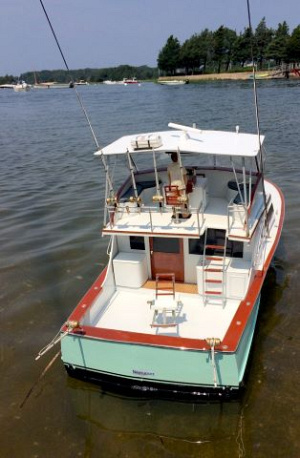
Photo 1&2 One of the many real boats. These are iconic around Cape Cod, Martha’s Vineyard, Nantucket, & other Atlantic bordering states.
Photo 3 Starting the frame & keel.
[{"id":"175157882045","name":"175157882045","caption":"","url":"https:\/\/hobby.land\/media\/175157882045\/l","thumbUrl":"https:\/\/hobby.land\/media\/175157882045\/s","isImage":false,"ext":"file"},{"id":"175157886911","name":"175157886911","caption":"","url":"https:\/\/hobby.land\/media\/175157886911\/l","thumbUrl":"https:\/\/hobby.land\/media\/175157886911\/s","isImage":false,"ext":"file"},{"id":"175158003191","name":"175158003191","caption":"","url":"https:\/\/hobby.land\/media\/175158003191\/l","thumbUrl":"https:\/\/hobby.land\/media\/175158003191\/s","isImage":false,"ext":"file"}]
Awaiting graphics to finish off THUNDER& METEOR so pulled this one off the shelf to resume the build. I’ll start at the beginning posting highlights so as not to take up too much time.
Photo 1&2 One of the many real boats. These are iconic around Cape Cod, Martha’s Vineyard, Nantucket, & other Atlantic bordering states.
Photo 3 Starting the frame & keel.
Thanks Doug. It’s been an interesting build to this point. I started out to build a lobster boat hull to use as the basis to construct a lobster yacht. These conversions are not all that common but serve a noble purpose by restoring a no longer working lobster boat into a handsome yacht.
The sea-keeping characteristics of the lobster boat hull spawned an entire boat building industry in the U.S. Notable brands included Mackenzie, Fortier, Wasque, Brownell & others. Ranging from around 26 ft to 32 ft they were/are used for recreational fishing & day sailing.
Sorry for the long-winded response but the entire concept behind boats like the Wasque 26 has quite a history.
Bill
[{"id":"175159372841","name":"175159372841","caption":"","url":"https:\/\/hobby.land\/media\/175159372841\/l","thumbUrl":"https:\/\/hobby.land\/media\/175159372841\/s","isImage":false,"ext":"file"}]
Thanks Doug. It’s been an interesting build to this point. I started out to build a lobster boat hull to use as the basis to construct a lobster yacht. These conversions are not all that common but serve a noble purpose by restoring a no longer working lobster boat into a handsome yacht.
The sea-keeping characteristics of the lobster boat hull spawned an entire boat building industry in the U.S. Notable brands included Mackenzie, Fortier, Wasque, Brownell & others. Ranging from around 26 ft to 32 ft they were/are used for recreational fishing & day sailing.
Sorry for the long-winded response but the entire concept behind boats like the Wasque 26 has quite a history.
A condensed bit of history regarding the 26.
Not clear if the original design for the Wasque (“Wayskwee) 26 was from an established boat builder or a Jonesport, Maine lobster boat. Named after Wasque Point on the Vineyard the numerous shoals between there & Nantucket Island are a striped bass fishing haven. The boats were originally built in Vineyard Haven by Vineyard Yachts which closed in 1985.
Chris Hood, his Uncle Ted Hood was founder of Ted Hood Sails, found the original 26 mold in a field in 1995. Since then 45 Wasque 26s have been built. Today, Hood only builds the larger 32ft version.
C.W. Hood, including Chris, has very kindly provided me with invaluable information for my model. I am very grateful for their interest & assistance.
[{"id":"175164196727","name":"175164196727","caption":"","url":"https:\/\/hobby.land\/media\/175164196727\/l","thumbUrl":"https:\/\/hobby.land\/media\/175164196727\/s","isImage":false,"ext":"file"}]
A condensed bit of history regarding the 26.
Not clear if the original design for the Wasque (“Wayskwee) 26 was from an established boat builder or a Jonesport, Maine lobster boat. Named after Wasque Point on the Vineyard the numerous shoals between there & Nantucket Island are a striped bass fishing haven. The boats were originally built in Vineyard Haven by Vineyard Yachts which closed in 1985.
Chris Hood, his Uncle Ted Hood was founder of Ted Hood Sails, found the original 26 mold in a field in 1995. Since then 45 Wasque 26s have been built. Today, Hood only builds the larger 32ft version.
C.W. Hood, including Chris, has very kindly provided me with invaluable information for my model. I am very grateful for their interest & assistance.
I started this build with frames derived from an old kit, the Midwest Bass Boat. After C.W. Hood sent me a lines drawing of the 26 I realized frame 1 was much more narrow than the bass boat’s. That change plus adding another frame forward, not yet in place in photo 1, provided the much sharper entry of the 26. See photo 2.
[{"id":"175165180895","name":"175165180895","caption":"","url":"https:\/\/hobby.land\/media\/175165180895\/l","thumbUrl":"https:\/\/hobby.land\/media\/175165180895\/s","isImage":false,"ext":"file"},{"id":"175165153952","name":"175165153952","caption":"","url":"https:\/\/hobby.land\/media\/175165153952\/l","thumbUrl":"https:\/\/hobby.land\/media\/175165153952\/s","isImage":false,"ext":"file"}]
I started this build with frames derived from an old kit, the Midwest Bass Boat. After C.W. Hood sent me a lines drawing of the 26 I realized frame 1 was much more narrow than the bass boat’s. That change plus adding another frame forward, not yet in place in photo 1, provided the much sharper entry of the 26. See photo 2.
Time to begin sheathing with 1/16” plywood.
Photo 1 Inept is a good descriptor. In spite of the templating with cardboard that conformed nicely the plywood simply could not bend to the bow’s compound curves. So pieces, pieces, pieces. Unworkmanlike!!!
Photo 2 Portside a bit better with fewer pieces.
The takeaway is I need to get better at sheathing. Solutions include soaking plywood in window cleaner to increase flexibility or use 1/16” birch instead of ply.
Everything will work after using filler, two coats of flowable epoxy inside the hull, & lightweight glass cloth & epoxy applied on hull’s exterior.🤞
BTW, if brief history posts are not particularly interesting to folks I’ll refrain from similar posts in the future. Comments welcome.
[{"id":"175172170499","name":"175172170499","caption":"","url":"https:\/\/hobby.land\/media\/175172170499\/l","thumbUrl":"https:\/\/hobby.land\/media\/175172170499\/s","isImage":false,"ext":"file"},{"id":"175172173088","name":"175172173088","caption":"","url":"https:\/\/hobby.land\/media\/175172173088\/l","thumbUrl":"https:\/\/hobby.land\/media\/175172173088\/s","isImage":false,"ext":"file"}]
Time to begin sheathing with 1/16” plywood.
Photo 1 Inept is a good descriptor. In spite of the templating with cardboard that conformed nicely the plywood simply could not bend to the bow’s compound curves. So pieces, pieces, pieces. Unworkmanlike!!!
Photo 2 Portside a bit better with fewer pieces.
The takeaway is I need to get better at sheathing. Solutions include soaking plywood in window cleaner to increase flexibility or use 1/16” birch instead of ply.
Everything will work after using filler, two coats of flowable epoxy inside the hull, & lightweight glass cloth & epoxy applied on hull’s exterior.🤞
BTW, if brief history posts are not particularly interesting to folks I’ll refrain from similar posts in the future. Comments welcome.
I have used good grades of balsa wood and thin basswood on several of my projects. After filler, sanding, fibreglass cloth and polyurethane inside and out, the hulls have turned out fine.
Hi Chum444, the work you are doing with the hull is very original and interesting for me, but I don't understand how you do it.
There are many empty spaces to fill and you don't have enough water lines or frames to follow; for motorboats the free pieces are straight instead you curve them, from what I understand. But how do you do it? Do you adjust by eye? Can you still obtain symmetry?
You have great ability.
Good afternoon Alessandro. You are a good observer. There are only a few frames in this build. I created hull sheathing between frames by using plywood(inherently stronger than plain basswood or balsa sheet) & adding glass cloth & epoxy coat on hull exterior plus two coats of epoxy on the interior.
Regarding bending, the easy part is from the stern forward to the bow only requires a bend to form the rounded chine (curve between bottom & side of hull). The photo shows the longitudinal member (garboard strake) that runs the full length of the keel. Actually garboard strake is not the correct term. I’m uncertain what the proper name is. The sheathing is first glued here, bent to form the curve of the bilge & then glued to the longitudinal member (shear clamp) that again runs the length of the hull. That sheet is then finally glued to the frames. The sheer clamp has to be rounded on the bottom edge toward the keel to be able to form that curve.
The tricky part is forming the bow where the sheathing must bend in two directions. Learning how to do that for me was largely by doing it. All of the forward frame edges have to be tapered toward the curve to get the proper bend. I did add another frame forward of Frame1 to give me another attachment point in the compound curve.
There are several books available that discuss plank on frame building that you might find useful. Hope this helps.
[{"id":"175181437516","name":"175181437516","caption":"","url":"https:\/\/hobby.land\/media\/175181437516\/l","thumbUrl":"https:\/\/hobby.land\/media\/175181437516\/s","isImage":false,"ext":"file"}]
Good afternoon Alessandro. You are a good observer. There are only a few frames in this build. I created hull sheathing between frames by using plywood(inherently stronger than plain basswood or balsa sheet) & adding glass cloth & epoxy coat on hull exterior plus two coats of epoxy on the interior.
Regarding bending, the easy part is from the stern forward to the bow only requires a bend to form the rounded chine (curve between bottom & side of hull). The photo shows the longitudinal member (garboard strake) that runs the full length of the keel. Actually garboard strake is not the correct term. I’m uncertain what the proper name is. The sheathing is first glued here, bent to form the curve of the bilge & then glued to the longitudinal member (shear clamp) that again runs the length of the hull. That sheet is then finally glued to the frames. The sheer clamp has to be rounded on the bottom edge toward the keel to be able to form that curve.
The tricky part is forming the bow where the sheathing must bend in two directions. Learning how to do that for me was largely by doing it. All of the forward frame edges have to be tapered toward the curve to get the proper bend. I did add another frame forward of Frame1 to give me another attachment point in the compound curve.
There are several books available that discuss plank on frame building that you might find useful. Hope this helps.
Thank you so much for your explanation Chum444.
In fact what surprised me the most was the bow part.
I still think that to make a good curve (that is the same on starboard as on port) with so few handholds (or guides let's say) you need excellent manual skills and a good eye.
If it's so easy for you it's because you have excellent manual skills.
I saw this photo & thought an outboard version might be interesting. Plus I had a quite pristine Mercury outboard that needed a purpose. However I confirmed with C.W. Hood that they never offered that as an option. That combined with an experience I had with another build, looks cool, runs fairly well, but was in my mind very questionable in terms of the little outboard’s overall endurance eliminated that thought.
[{"id":"175181560698","name":"175181560698","caption":"","url":"https:\/\/hobby.land\/media\/175181560698\/l","thumbUrl":"https:\/\/hobby.land\/media\/175181560698\/s","isImage":false,"ext":"file"},{"id":"175181577992","name":"175181577992","caption":"","url":"https:\/\/hobby.land\/media\/175181577992\/l","thumbUrl":"https:\/\/hobby.land\/media\/175181577992\/s","isImage":false,"ext":"file"}]
I saw this photo & thought an outboard version might be interesting. Plus I had a quite pristine Mercury outboard that needed a purpose. However I confirmed with C.W. Hood that they never offered that as an option. That combined with an experience I had with another build, looks cool, runs fairly well, but was in my mind very questionable in terms of the little outboard’s overall endurance eliminated that thought.
I don’t disagree Alessandro. In the bow or other locations with compound curves the more frames the better. Before I begin the sheathing I check shape P & S with battens along many what would be waterlines on a lines drawing. Yes, there is a large “ pleasing to the eye” aspect to it. Can’t guarantee that P & S are 100% symmetrical but they can probably withstand all but a Naval Architect’s gaze. 😉
Having said all of this sheathing techniques are in many cases a product of preference & experience. By the way , I’ve never found a bare fiberglass hull I’ve purchased ( my usual starting point ) to be absolutely symmetrical.
I don’t disagree Alessandro. In the bow or other locations with compound curves the more frames the better. Before I begin the sheathing I check shape P & S with battens along many what would be waterlines on a lines drawing. Yes, there is a large “ pleasing to the eye” aspect to it. Can’t guarantee that P & S are 100% symmetrical but they can probably withstand all but a Naval Architect’s gaze. 😉
Having said all of this sheathing techniques are in many cases a product of preference & experience. By the way , I’ve never found a bare fiberglass hull I’ve purchased ( my usual starting point ) to be absolutely symmetrical.
Some prefer to use balsa blocks in the bow, and stern if its shape is complex, & sand it to shape. Glass cloth & resin then applied. Must work well as I’ve seen many use this technique in posts on a site in the U.S. Never tried it myself. Doubt I could come close to any symmetry that way.
After completing full knee replacement for right knee, I’ve regained enough mobility to proceed at some level with the 26.
Transitioned from cardboard to sintra for the foredeck. Rough fit looks good. I think I like the profile in photo 2 but will eyeball it a bit more. Since I used lines from another boat initially the length was of 1/12 scale. Turns out to be 1/14 scale so had to make the scale ruler in third photo.
After completing full knee replacement for right knee, I’ve regained enough mobility to proceed at some level with the 26.
Transitioned from cardboard to sintra for the foredeck. Rough fit looks good. I think I like the profile in photo 2 but will eyeball it a bit more. Since I used lines from another boat initially the length was of 1/12 scale. Turns out to be 1/14 scale so had to make the scale ruler in third photo.
Philuk👍
👍👍👍