The History
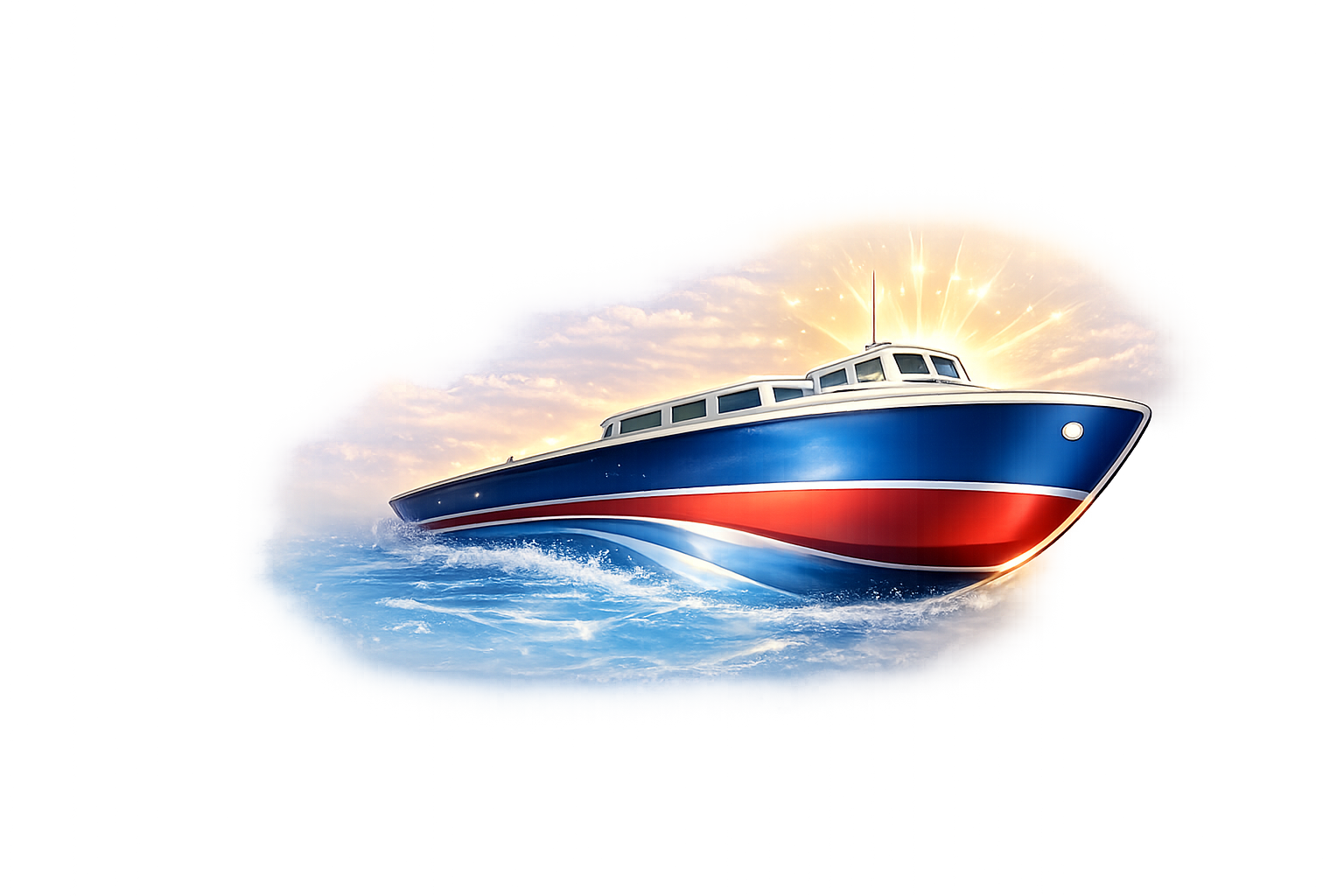
The Düsseldorf fire-fighting boat was developed and built by the Rheinwerft company of Mainz-Mombach, and it is operated in the Ruhr industrial region of Germany. The vessel is designed specifically to cope with disaster situations, such as a ship on fire, a major oil leak or a harbor system in danger of explosion, and its fire monitors, operating at a pressure of 10.5 bar, can hurl water or foam 145 feet high and a distance of up to 310 feet. The two V-12 engines produce a total of 930 kW (1260 BHP), giving the boat a maximum speed of around 23 mph.
The Model
The Romarin kit of the Düsseldorf fire-fighting boat is large and capacious enough to accommodate all the equipment required to emulate the wide-ranging facilities of the full-size vessel. Optional working systems include the fire monitors, crane, anchor winch, radar, searchlights, blue light, horn and siren, and also the sound of the diesel engines. The plastic hull is moulded in thick-walled material, and it offers plenty of space for the numerous mechanical and electronic parts required for the auxiliary working systems. The model is propelled by two proven MAX Gear power systems, giving it an impressive turn of speed. Four large rudders guarantee extreme maneuvering capability both forwards and astern. The fire monitors can be swiveled horizontally and vertically from the transmitter, and with the recommended electric geared pump they can fire a jet of water a distance of 20 feet. If a working boat crane is fitted, the vacuum-moulded rowing board can be raised, swung outboard and lowered to the water in true scale style.
The TD SR12 receiver is equipped with a triple antenna (2×2.4G & 1×900M) design that provides multi-directional wide coverage for the remote signal and is designed for RC users who want to benefit from resilience and long-range in their radio communications.
TD SR12 also provides a socket that can be used to connect the NFC Switch panel to enable the built-in Power Switch function. Dual-power provides a safe and efficient way to power the system with your power sources connected via a pair of standard XT30 connections. The dual-power consumption system is designed to operate in balance mode, where it consumes the power line from either power source depending on which has the higher voltage. With a built-in black box module, the data (Power & Signal related) under unusual status during the flight can be recorded by TD receivers.
The configurable 12-channel ports are a big feature of TD SR12, each channel port can be assigned as PWM, SBUS, FBUS, or S.Port. With the FBUS protocol, the Tandem series receivers can open up the possibility of seamlessly pairing with multiple telemetry devices (Neuron ESC, Advance Sensors, etc.) as well as simplifying the builds setup.
https://youtu.be/E_JhmeIZbW0
{"text":"The History\nThe D\u00fcsseldorf fire-fighting boat was developed and built by the Rheinwerft company of Mainz-Mombach, and it is operated in the Ruhr industrial region of Germany. The vessel is designed specifically to cope with disaster situations, such as a ship on fire, a major oil leak or a harbor system in danger of explosion, and its fire monitors, operating at a pressure of 10.5 bar, can hurl water or foam 145 feet high and a distance of up to 310 feet. The two V-12 engines produce a total of 930 kW (1260 BHP), giving the boat a maximum speed of around 23 mph.\n\nThe Model\nThe Romarin kit of the D\u00fcsseldorf fire-fighting boat is large and capacious enough to accommodate all the equipment required to emulate the wide-ranging facilities of the full-size vessel. Optional working systems include the fire monitors, crane, anchor winch, radar, searchlights, blue light, horn and siren, and also the sound of the diesel engines. The plastic hull is moulded in thick-walled material, and it offers plenty of space for the numerous mechanical and electronic parts required for the auxiliary working systems. The model is propelled by two proven MAX Gear power systems, giving it an impressive turn of speed. Four large rudders guarantee extreme maneuvering capability both forwards and astern. The fire monitors can be swiveled horizontally and vertically from the transmitter, and with the recommended electric geared pump they can fire a jet of water a distance of 20 feet. If a working boat crane is fitted, the vacuum-moulded rowing board can be raised, swung outboard and lowered to the water in true scale style.\n\nThe TD SR12 receiver is equipped with a triple antenna (2\u00d72.4G & 1\u00d7900M) design that provides multi-directional wide coverage for the remote signal and is designed for RC users who want to benefit from resilience and long-range in their radio communications.\nTD SR12 also provides a socket that can be used to connect the NFC Switch panel to enable the built-in Power Switch function. Dual-power provides a safe and efficient way to power the system with your power sources connected via a pair of standard XT30 connections. The dual-power consumption system is designed to operate in balance mode, where it consumes the power line from either power source depending on which has the higher voltage. With a built-in black box module, the data (Power & Signal related) under unusual status during the flight can be recorded by TD receivers.\nThe configurable 12-channel ports are a big feature of TD SR12, each channel port can be assigned as PWM, SBUS, FBUS, or S.Port. With the FBUS protocol, the Tandem series receivers can open up the possibility of seamlessly pairing with multiple telemetry devices (Neuron ESC, Advance Sensors, etc.) as well as simplifying the builds setup.\n\nhttps://youtu.be/E_JhmeIZbW0","subject":"Testing The Dusselforf Fireboat with The FRSky TD Receiver at SMBC - 14 May 2025","media":[],"youtubeUrl":"https://www.youtube.com/watch?v=E_JhmeIZbW0"}
Testing The Dusselforf Fireboat with The FRSky TD Receiver at SMBC - 14 May 2025
The History
The Düsseldorf fire-fighting boat was developed and built by the Rheinwerft company of Mainz-Mombach, and it is operated in the Ruhr industrial region of Germany. The vessel is designed specifically to cope with disaster situations, such as a ship on fire, a major oil leak or a harbor system in danger of explosion, and its fire monitors, operating at a pressure of 10.5 bar, can hurl water or foam 145 feet high and a distance of up to 310 feet. The two V-12 engines produce a total of 930 kW (1260 BHP), giving the boat a maximum speed of around 23 mph.
The Model
The Romarin kit of the Düsseldorf fire-fighting boat is large and capacious enough to accommodate all the equipment required to emulate the wide-ranging facilities of the full-size vessel. Optional working systems include the fire monitors, crane, anchor winch, radar, searchlights, blue light, horn and siren, and also the sound of the diesel engines. The plastic hull is moulded in thick-walled material, and it offers plenty of space for the numerous mechanical and electronic parts required for the auxiliary working systems. The model is propelled by two proven MAX Gear power systems, giving it an impressive turn of speed. Four large rudders guarantee extreme maneuvering capability both forwards and astern. The fire monitors can be swiveled horizontally and vertically from the transmitter, and with the recommended electric geared pump they can fire a jet of water a distance of 20 feet. If a working boat crane is fitted, the vacuum-moulded rowing board can be raised, swung outboard and lowered to the water in true scale style.
The TD SR12 receiver is equipped with a triple antenna (2×2.4G & 1×900M) design that provides multi-directional wide coverage for the remote signal and is designed for RC users who want to benefit from resilience and long-range in their radio communications.
TD SR12 also provides a socket that can be used to connect the NFC Switch panel to enable the built-in Power Switch function. Dual-power provides a safe and efficient way to power the system with your power sources connected via a pair of standard XT30 connections. The dual-power consumption system is designed to operate in balance mode, where it consumes the power line from either power source depending on which has the higher voltage. With a built-in black box module, the data (Power & Signal related) under unusual status during the flight can be recorded by TD receivers.
The configurable 12-channel ports are a big feature of TD SR12, each channel port can be assigned as PWM, SBUS, FBUS, or S.Port. With the FBUS protocol, the Tandem series receivers can open up the possibility of seamlessly pairing with multiple telemetry devices (Neuron ESC, Advance Sensors, etc.) as well as simplifying the builds setup.
Just a fun project to use up some old radio gear , single for steering only, or two channel if you want to include a sail winch.
Great for when the pond is full of weed - Also if no wind , stick a motor on the front or back !.
Just have fun !
{"text":"Just a fun project to use up some old radio gear , single for steering only, or two channel if you want to include a sail winch. \nGreat for when the pond is full of weed - Also if no wind , stick a motor on the front or back !.\nJust have fun !","subject":"Land Yacht Project","media":[],"youtubeUrl":"https://www.youtube.com/watch?v=eZA3JScqP_0"}
Just a fun project to use up some old radio gear , single for steering only, or two channel if you want to include a sail winch.
Great for when the pond is full of weed - Also if no wind , stick a motor on the front or back !.
Just have fun !
Perhaps not a boat, but no pond is complete without one of these gems.
This lighthouse is fully remote controlled.
The lamp rotates at 12 rpm allowing a flash of light every 5 seconds.
A 5kg weight is mounted under the island and winched down to the bottom of the dam to anchor the island. The winch is powered by a 6V Ryobi Cordless Screw Driver's gearbox and motor.
The Fog Horn is operated by a 9V motor with a counterbalance causing a vibration inside the tower, amplifying the sound effect of a steam horn.
It's built at 1:35 scale and stands 80cm tall.
{"text":"Perhaps not a boat, but no pond is complete without one of these gems.\nThis lighthouse is fully remote controlled. \nThe lamp rotates at 12 rpm allowing a flash of light every 5 seconds.\nA 5kg weight is mounted under the island and winched down to the bottom of the dam to anchor the island. The winch is powered by a 6V Ryobi Cordless Screw Driver's gearbox and motor.\nThe Fog Horn is operated by a 9V motor with a counterbalance causing a vibration inside the tower, amplifying the sound effect of a steam horn.\nIt's built at 1:35 scale and stands 80cm tall.","subject":"The Northern City Lighthouse","media":[{"id":"164668208749","name":"164668208749","caption":"","url":"https://hobby.land/media/164668208749/l","thumbUrl":"https://hobby.land/media/164668208749/s","isImage":false,"ext":"file"}],"youtubeUrl":"https://www.youtube.com/watch?v=ddsdMt9vfcU"}
Perhaps not a boat, but no pond is complete without one of these gems.
This lighthouse is fully remote controlled.
The lamp rotates at 12 rpm allowing a flash of light every 5 seconds.
A 5kg weight is mounted under the island and winched down to the bottom of the dam to anchor the island. The winch is powered by a 6V Ryobi Cordless Screw Driver's gearbox and motor.
The Fog Horn is operated by a 9V motor with a counterbalance causing a vibration inside the tower, amplifying the sound effect of a steam horn.
It's built at 1:35 scale and stands 80cm tall.
Finally got a good day, so raced down to the pond and threw the boat in. 2 problems, 1: battery had run down a bit with all the testing, and the new 18kg digital servo winch needed every bit of 4.8v, so functioned intermittently, meaning not much sail control, 2: jib boom needs a kicking strap to stop it 'skying' and tangling (knew it would happen but wasn't a worry). Apart from that, everything worked perfectly ( cheapo China Futaba knock -off rudder servo still worked fine on the low battery which is a bonus)
Sailed brilliantly like it did over 40 yrs ago, and as it's set will sail hands off on a reach, being nicely balanced, (even with the crappy jib,- which I had to make,- well actually my mother made for me,- back in 1980 after the original was stolen by a kid at the beach, while my back was turned😠) Funnily enough it was made on the same Bernina I used to sew (horrendously) the jib foot after trimming it for the boom a few days ago.
A few more things to improve and add, but pleased to have it back on the water. Another crap video, -seems to get blurry once it's been through the movie editor and You tube ) One day santa might bring me a Gopro, ("yeah right"!)
{"text":"Finally got a good day, so raced down to the pond and threw the boat in. 2 problems, 1: battery had run down a bit with all the testing, and the new 18kg digital servo winch needed every bit of 4.8v, so functioned intermittently, meaning not much sail control, 2: jib boom needs a kicking strap to stop it 'skying' and tangling (knew it would happen but wasn't a worry). Apart from that, everything worked perfectly ( cheapo China Futaba knock -off rudder servo still worked fine on the low battery which is a bonus)\n\nSailed brilliantly like it did over 40 yrs ago, and as it's set will sail hands off on a reach, being nicely balanced, (even with the crappy jib,- which I had to make,- well actually my mother made for me,- back in 1980 after the original was stolen by a kid at the beach, while my back was turned\ud83d\ude20) Funnily enough it was made on the same Bernina I used to sew (horrendously) the jib foot after trimming it for the boom a few days ago. \n\nA few more things to improve and add, but pleased to have it back on the water. Another crap video, -seems to get blurry once it's been through the movie editor and You tube ) One day santa might bring me a Gopro, (\"yeah right\"!)","subject":"GRAUPNER OPTIMIST REFITTED, FIRST SAIL IN 22YRS","media":[],"youtubeUrl":"https://www.youtube.com/watch?v=P7UcL-utWso"}
Finally got a good day, so raced down to the pond and threw the boat in. 2 problems, 1: battery had run down a bit with all the testing, and the new 18kg digital servo winch needed every bit of 4.8v, so functioned intermittently, meaning not much sail control, 2: jib boom needs a kicking strap to stop it 'skying' and tangling (knew it would happen but wasn't a worry). Apart from that, everything worked perfectly ( cheapo China Futaba knock -off rudder servo still worked fine on the low battery which is a bonus)
Sailed brilliantly like it did over 40 yrs ago, and as it's set will sail hands off on a reach, being nicely balanced, (even with the crappy jib,- which I had to make,- well actually my mother made for me,- back in 1980 after the original was stolen by a kid at the beach, while my back was turned😠) Funnily enough it was made on the same Bernina I used to sew (horrendously) the jib foot after trimming it for the boom a few days ago.
A few more things to improve and add, but pleased to have it back on the water. Another crap video, -seems to get blurry once it's been through the movie editor and You tube ) One day santa might bring me a Gopro, ("yeah right"!)
Looks like a perfect day. I find sailing very relaxing and quiet, with no engine/motor noise. Can be quite challenging though, especially when you need to bring it back in to the dock.
Graham93
JB,
Looks like a perfect day. I find sailing very relaxing and quiet, with no engine/motor noise. Can be quite challenging though, especially when you need to bring it back in to the dock.
Graham93
Hi the Graupner yachts are the best, I have a Gracia and she sails very nicely and such a pleasure to watch. She had a small change last year to the servos and works for ever on a 4 AA cell pack 2300mAh. I have a little less sail area and have a sail servo the same size as a standard servo and this copes OK.
regards Roy
Hi the Graupner yachts are the best, I have a Gracia and she sails very nicely and such a pleasure to watch. She had a small change last year to the servos and works for ever on a 4 AA cell pack 2300mAh. I have a little less sail area and have a sail servo the same size as a standard servo and this copes OK.
regards Roy
Some details of Thor. - by Dean Ratcliffe.
Thor is a freelance design of a multicat vessel. These rather unusual ships are real workhorses, designed as a work platform, often with a hiab crane. The square hull gives a large flat deck, with plenty of open space for a work area or for deck cargo. The design also enables the vessel to be used as a tugboat, either pushing or towing and are often equipped with large deck winches and strong points for this purpose. A true Swiss army knife of the sea, able to adapt to most roles, some even have additional internal fuel tanks for refuelling other vessels.
More info found on -
Model Boats Website - BoatClubs & Lakes - Buxton Model Boat Club
https://model-boats.com/places/60518
{"text":"Some details of Thor. - by Dean Ratcliffe.\n\nThor is a freelance design of a multicat vessel. These rather unusual ships are real workhorses, designed as a work platform, often with a hiab crane. The square hull gives a large flat deck, with plenty of open space for a work area or for deck cargo. The design also enables the vessel to be used as a tugboat, either pushing or towing and are often equipped with large deck winches and strong points for this purpose. A true Swiss army knife of the sea, able to adapt to most roles, some even have additional internal fuel tanks for refuelling other vessels. \nMore info found on - \nModel Boats Website - BoatClubs & Lakes - Buxton Model Boat Club\n\nhttps://model-boats.com/places/60518","subject":"\" Thor \" - freelance design of a multicat vessel.","media":[],"youtubeUrl":"https://www.youtube.com/watch?v=8U9SxC00RiE"}
Thor is a freelance design of a multicat vessel. These rather unusual ships are real workhorses, designed as a work platform, often with a hiab crane. The square hull gives a large flat deck, with plenty of open space for a work area or for deck cargo. The design also enables the vessel to be used as a tugboat, either pushing or towing and are often equipped with large deck winches and strong points for this purpose. A true Swiss army knife of the sea, able to adapt to most roles, some even have additional internal fuel tanks for refuelling other vessels.
More info found on -
Model Boats Website - BoatClubs & Lakes - Buxton Model Boat Club
In light to medium wind , even with just one servo on rudder only , the "Nip" is in its element tacking within a desired arc.
Adding the second servo for winch control provides adequate range for tighter tacks and broader reach/ runs.
Get the best mast position established - then just "SMILE" !.
{"text":"In light to medium wind , even with just one servo on rudder only , the \"Nip\" is in its element tacking within a desired arc.\n Adding the second servo for winch control provides adequate range for tighter tacks and broader reach/ runs.\n\nGet the best mast position established - then just \"SMILE\" !.","subject":"Wee Nip","media":[],"youtubeUrl":"https://www.youtube.com/watch?v=kGapySxkat4"}
In light to medium wind , even with just one servo on rudder only , the "Nip" is in its element tacking within a desired arc.
Adding the second servo for winch control provides adequate range for tighter tacks and broader reach/ runs.
Get the best mast position established - then just "SMILE" !.
Hello !
Som more Pictures of my Fairmount Alpine , A little bit forward on the deck
propshaft and rudder is mounted
the towing winch is mounted and working
more
pictures is comming
// Have a nice weekend
all boat builders 👍
{"text":"Hello !\nSom more Pictures of my Fairmount Alpine , A little bit forward on the deck\npropshaft and rudder is mounted \nthe towing winch is mounted and working \nmore \npictures is comming\n\n// Have a nice weekend\nall boat builders \ud83d\udc4d","subject":"Fairmount Alpine","media":[{"id":"1551514363","name":"1551514363.jpg","caption":"","url":"https://hobby.land/media/1551514363/l","thumbUrl":"https://hobby.land/media/1551514363/s","isImage":true,"ext":"jpg"},{"id":"1551514389","name":"1551514389.jpg","caption":"","url":"https://hobby.land/media/1551514389/l","thumbUrl":"https://hobby.land/media/1551514389/s","isImage":true,"ext":"jpg"},{"id":"1551514394","name":"1551514394.jpg","caption":"","url":"https://hobby.land/media/1551514394/l","thumbUrl":"https://hobby.land/media/1551514394/s","isImage":true,"ext":"jpg"}],"youtubeUrl":""}
Hello !
Som more Pictures of my Fairmount Alpine , A little bit forward on the deck
propshaft and rudder is mounted
the towing winch is mounted and working
more
pictures is comming
Here's my Robbe smaragd, its about 30 years old and recently I have refitted some electronics. sailwinch replaced for the genua fore sail. it just did not function very well.
It sails like a beauty and very steady on coarse.
{"text":"Here's my Robbe smaragd, its about 30 years old and recently I have refitted some electronics. sailwinch replaced for the genua fore sail. it just did not function very well.\nIt sails like a beauty and very steady on coarse.","subject":"Robbe Smaragd","media":[{"id":"1548351398","name":"1548351398.jpg","caption":"","url":"https://hobby.land/media/1548351398/l","thumbUrl":"https://hobby.land/media/1548351398/s","isImage":true,"ext":"jpg"},{"id":"1548351400","name":"1548351400.jpg","caption":"","url":"https://hobby.land/media/1548351400/l","thumbUrl":"https://hobby.land/media/1548351400/s","isImage":true,"ext":"jpg"},{"id":"1548351438","name":"1548351438.jpg","caption":"","url":"https://hobby.land/media/1548351438/l","thumbUrl":"https://hobby.land/media/1548351438/s","isImage":true,"ext":"jpg"},{"id":"1548351478","name":"1548351478.jpg","caption":"","url":"https://hobby.land/media/1548351478/l","thumbUrl":"https://hobby.land/media/1548351478/s","isImage":true,"ext":"jpg"},{"id":"1548351450","name":"1548351450.jpg","caption":"","url":"https://hobby.land/media/1548351450/l","thumbUrl":"https://hobby.land/media/1548351450/s","isImage":true,"ext":"jpg"},{"id":"1548351457","name":"1548351457.jpg","caption":"","url":"https://hobby.land/media/1548351457/l","thumbUrl":"https://hobby.land/media/1548351457/s","isImage":true,"ext":"jpg"},{"id":"1548351433","name":"1548351433.jpg","caption":"","url":"https://hobby.land/media/1548351433/l","thumbUrl":"https://hobby.land/media/1548351433/s","isImage":true,"ext":"jpg"}],"youtubeUrl":""}
Here's my Robbe smaragd, its about 30 years old and recently I have refitted some electronics. sailwinch replaced for the genua fore sail. it just did not function very well.
It sails like a beauty and very steady on coarse.
Trying to learn to use this forum properly I am publishing a video that shows an experiment I did to find out how fast the stepper motor could turn. I am using in my model of the sailboat Carina 2 stepper motors like the one shown in the video to work as a winch to control the position of the sails in a system solution where I am realizing this my own way to implement the sheets as shown on the original sailboat Endeavour. This requires my sheet control system to control the length of the sheet of the mainsail i.e. over a range of 8.3 meters. This requires the drum which is turned by the stepper motor to make 21 full turns. Details will be published in my report from scratch of building my Carina.
{"text":"Trying to learn to use this forum properly I am publishing a video that shows an experiment I did to find out how fast the stepper motor could turn. I am using in my model of the sailboat Carina 2 stepper motors like the one shown in the video to work as a winch to control the position of the sails in a system solution where I am realizing this my own way to implement the sheets as shown on the original sailboat Endeavour. This requires my sheet control system to control the length of the sheet of the mainsail i.e. over a range of 8.3 meters. This requires the drum which is turned by the stepper motor to make 21 full turns. Details will be published in my report from scratch of building my Carina.","subject":"Carina","media":[],"youtubeUrl":"https://www.youtube.com/watch?v=nopezWBlDL0"}
Trying to learn to use this forum properly I am publishing a video that shows an experiment I did to find out how fast the stepper motor could turn. I am using in my model of the sailboat Carina 2 stepper motors like the one shown in the video to work as a winch to control the position of the sails in a system solution where I am realizing this my own way to implement the sheets as shown on the original sailboat Endeavour. This requires my sheet control system to control the length of the sheet of the mainsail i.e. over a range of 8.3 meters. This requires the drum which is turned by the stepper motor to make 21 full turns. Details will be published in my report from scratch of building my Carina.
So close just the superstructure to do.. Even put.a 60kg long tow winch in lop full rewiring and she pulls like a train
{"text":"So close just the superstructure to do.. Even put.a 60kg long tow winch in lop full rewiring and she pulls like a train","subject":"Amsterdam","media":[{"id":"1535184488","name":"1535184488.jpg","caption":"","url":"https://hobby.land/media/1535184488/l","thumbUrl":"https://hobby.land/media/1535184488/s","isImage":true,"ext":"jpg"}],"youtubeUrl":""}
Model is 49” long and with ballast keel added weighs 17 lbs. hull is covered with 2 layers of 2 oz. cloth fiberglass cloth and painted with Krylon spray can paint. Hitec sail winch servo for main sail and standard servo for jib. Model has auxiliary 6 volt electric power to compincate for my sailing ability’s and wind conditions.
Sails are Mylar.

{"text":"Model is 49\u201d long and with ballast keel added weighs 17 lbs. hull is covered with 2 layers of 2 oz. cloth fiberglass cloth and painted with Krylon spray can paint. Hitec sail winch servo for main sail and standard servo for jib. Model has auxiliary 6 volt electric power to compincate for my sailing ability\u2019s and wind conditions. \nSails are Mylar.","subject":"Sterling Emma C Berry","media":[{"id":"1533225029","name":"1533225029.jpeg","caption":"","url":"https://hobby.land/media/1533225029/l","thumbUrl":"https://hobby.land/media/1533225029/s","isImage":true,"ext":"jpeg"},{"id":"1533225012","name":"1533225012.jpeg","caption":"","url":"https://hobby.land/media/1533225012/l","thumbUrl":"https://hobby.land/media/1533225012/s","isImage":true,"ext":"jpeg"},{"id":"1533225009","name":"1533225009.jpeg","caption":"","url":"https://hobby.land/media/1533225009/l","thumbUrl":"https://hobby.land/media/1533225009/s","isImage":true,"ext":"jpeg"},{"id":"1533225019","name":"1533225019.jpeg","caption":"","url":"https://hobby.land/media/1533225019/l","thumbUrl":"https://hobby.land/media/1533225019/s","isImage":true,"ext":"jpeg"},{"id":"1533225036","name":"1533225036.jpeg","caption":"","url":"https://hobby.land/media/1533225036/l","thumbUrl":"https://hobby.land/media/1533225036/s","isImage":true,"ext":"jpeg"}],"youtubeUrl":""}
Model is 49” long and with ballast keel added weighs 17 lbs. hull is covered with 2 layers of 2 oz. cloth fiberglass cloth and painted with Krylon spray can paint. Hitec sail winch servo for main sail and standard servo for jib. Model has auxiliary 6 volt electric power to compincate for my sailing ability’s and wind conditions.
Sails are Mylar.